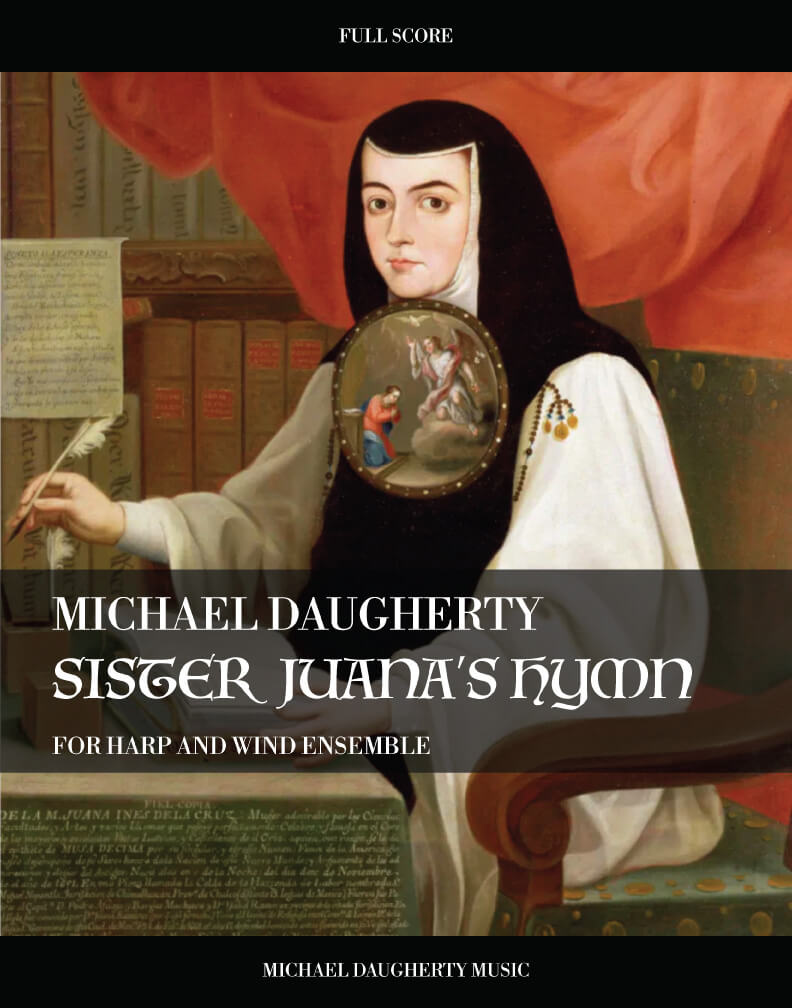
Sister Juana’s Hymn
for harp and wind ensemble (2026)
Instrumentation:
Number of players doubling each part at the discretion of the conductor but in keeping with a balanced sound
Piccolo
2 Flutes
Oboe
Bassoon
4 Bb Clarinets
Bass Clarinet
Eb Contralto
2 Alto Saxophones
Tenor Saxophone
Baritone Saxophone
2 Bb Trumpets
2 Horns
2 Trombones
Euphonium
Tuba
Timpani
Solo Harp (slight amplification recommended)
Percussion: 4 players (instruments are not shared)
Percussion 1:
Chimes
Glockenspiel, “Magic Flute” and hard plastic mallets
Percussion 2:
Vibraphone
Percussion 3:
Marimba
Percussion 4:
Castanets
Large Whip
Metal Wind Chimes
Publisher: Michael Daugherty Music
Duration: 7 minutes
Score in C
Composer’s Note:
Sister Juana’s Hymn (2026) for harp and wind ensemble was commissioned and premiered by the Tyler Junior College Wind Ensemble, conducted by Jeremy Strickland, at the 2027 TMEA in San Antonio, Texas, on February 11, 2027.
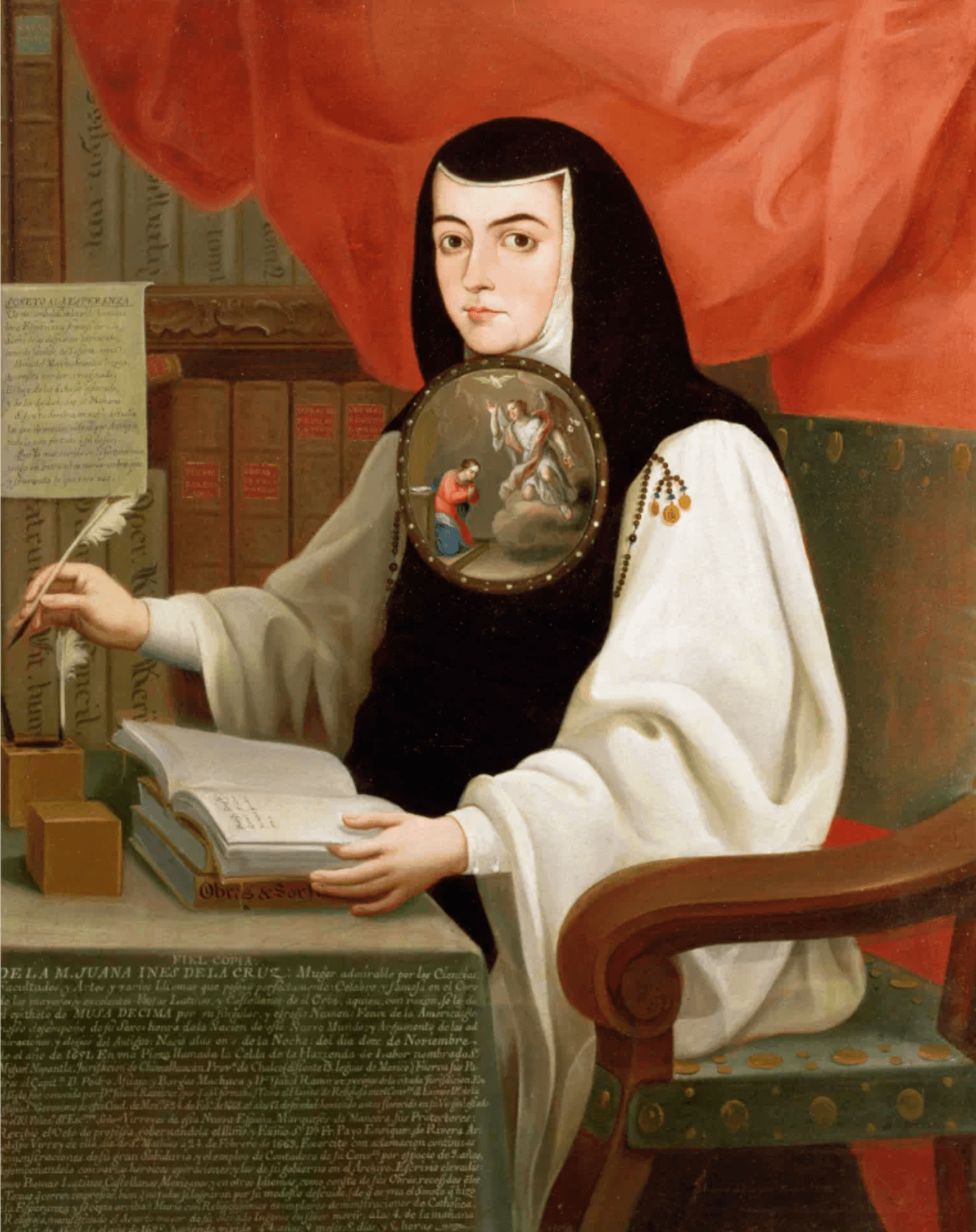
Sor Juana Inés de la Cruz (also known as Sister Juana) was a Mexican nun who became famous as a poet, scholar, and composer. As one of the most important female poets and writers of the Spanish Golden Age, she advocated for freedom of speech, women’s rights, and diversity. Sister Juana was also a composer who wrote harp-accompanied music, complex sacred songs, villancicos, and festive works performed in cathedrals across Mexico.
Her progressive beliefs and writings eventually caused her to be censured by the Catholic Church, which confiscated all her manuscripts, books, and musical instruments. After being coerced by the Church into undergoing penance, Sister Juana died in 1695 at the age of 46, ministering to other nuns stricken by a plague.
In my tribute to Sister Juana, I have incorporated fragments of her anthem “Madre, la de los primores”, a Baroque musical work and villancico she composed in 1686.
–Michael Daugherty
Composer Biography:
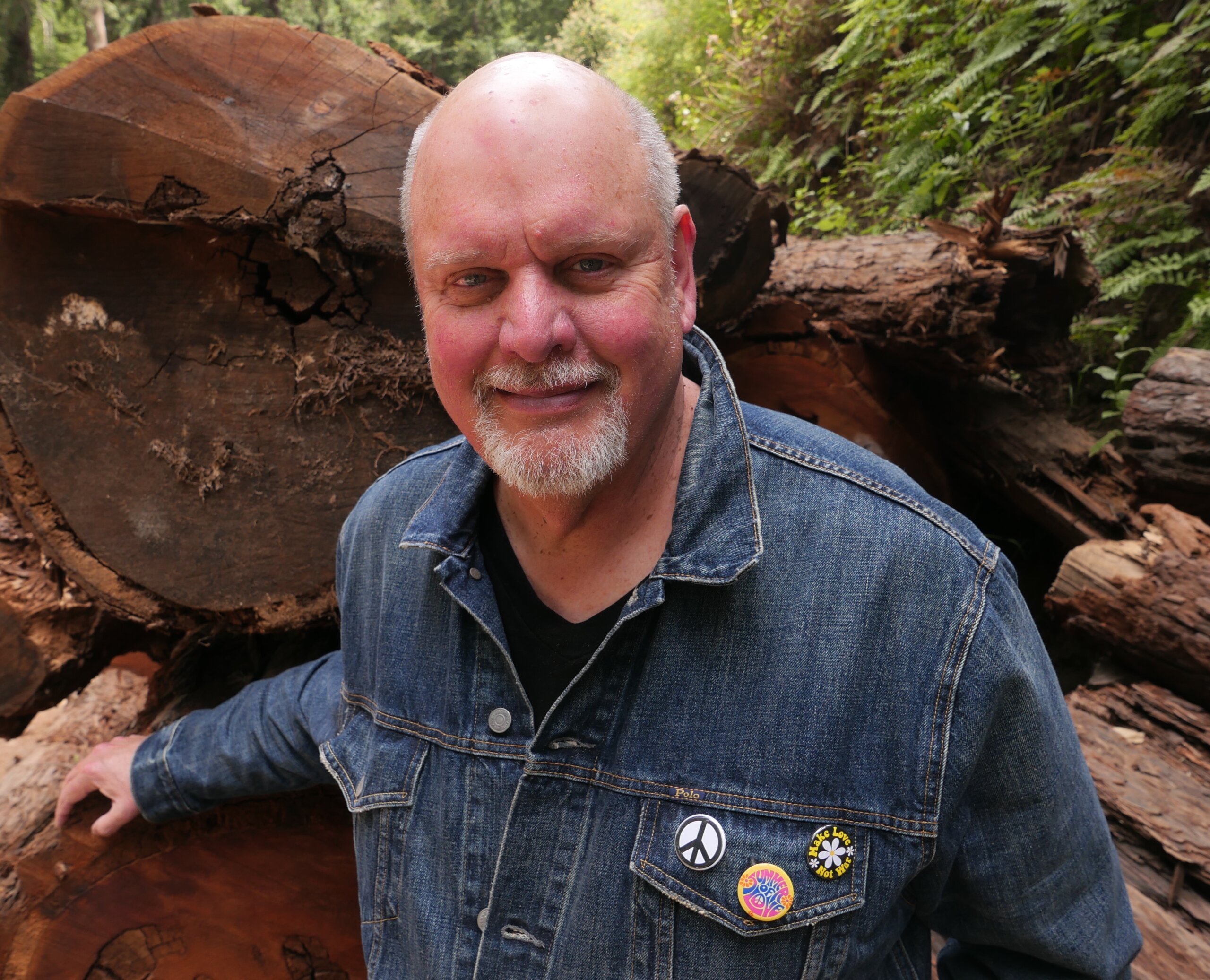
Multiple GRAMMY® Award-winning composer Michael Daugherty is one of the most commissioned, performed, and recorded composers on today’s international concert music scene. His music is rich with cultural allusions and bears the stamp of classic modernism, with colliding tonalities and blocks of sound. At the same time, his melodies can be eloquent and stirring. Known for his ear, wit, and imagination for how instruments work together, Daugherty’s music draws on American idioms, mythologies, and icons.
His music, recorded by Naxos over the last two decades, has received six GRAMMY Awards, including “Best Contemporary Classical Composition” in 2011 for Deus ex Machina for piano and orchestra and in 2017 for Tales of Hemingway for cello and orchestra.
Born in 1954 in Cedar Rapids, Iowa, Daugherty is the son of a dance band drummer and the oldest of five brothers, all professional musicians. As a young man, Daugherty studied composition with many of the preeminent composers of the 20th century, including Jacob Druckman, Earle Brown, Bernard Rands, and Roger Reynolds at Yale (1980-82), Pierre Boulez at IRCAM in Paris, Betsy Jolas at the Paris Conservatory (1979), and György Ligeti in Hamburg (1982-84). Daugherty was also an assistant to jazz arranger Gil Evans in New York (1980-82).
After teaching at the Oberlin Conservatory of Music in Oberlin, Ohio (1986-91), Daugherty served as Professor of Composition at the University of Michigan School of Music, Theatre and Dance in Ann Arbor, Michigan, for 35 years (1991-2026), where he mentored many of today’s most talented young composers. Daugherty is a frequent guest of professional orchestras, festivals, universities, and conservatories around the world.